Mews Marketplace is the largest integration ecosystem in hotel software, with more than 1,000 certified apps and no fee to connect any of them, so the real question for a Mews property is not whether to integrate but which integrations earn their place. The 12 below are the ones that reliably pay back, grouped by the marketplace’s own categories.
Here is the opinion the rest of this piece rests on. Most hotels build a capable revenue and distribution stack, then leave the guest experience and reputation category almost empty. That is the most expensive gap on the list, because reputation is the input that decides whether the rest of your stack ever sees a booking to work with.
Why Mews Marketplace rewards a best-of-breed stack
The marketplace is designed so specialist tools beat an all-in-one suite, because Mews charges nothing to plug them in. Mews passed 1,000 Marketplace integrations in late 2023, and each one is certified by the Mews partner team before it goes live. There are no connection or set-up fees, which changes the maths. The only cost of adding the right app is the app itself, not a charge for the privilege of connecting it.
Demand for the platform is rising, with US search volume for Mews up 22% year over year, a sign that more properties are standardising on it and that the partner ecosystem around it keeps growing. More apps competing in each category is good for the buyer. The job is no longer finding a tool that connects. It is choosing well in each slot. For the wider view of what bolts onto a hotel PMS, see our guide to hotel PMS integrations.
The category most hotels skip: guest experience and reputation
If your stack has a pricing tool and a channel manager but no review automation, start here, because reputation has the shortest path to revenue of anything you can add. A property’s star rating and review recency feed straight into how it ranks on Google, TripAdvisor and inside the OTAs, and that rank decides who even sees the room your revenue tool just priced. It is also the category with the clearest return, because the output, more reviews and a higher rating, lands on bookings and pricing power rather than on an internal dashboard.
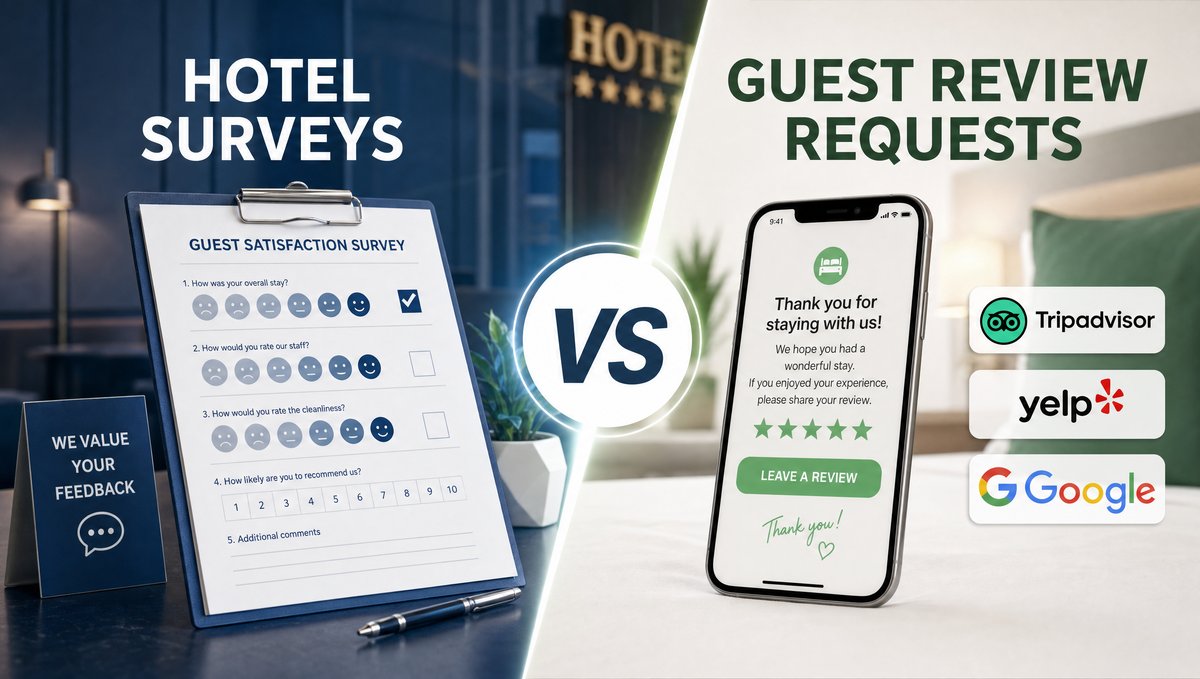
1. ReviewFilter fills the reputation slot. It fires a post-stay review request from the Mews checkout event, sends satisfied guests to the public platforms and routes unhappy ones to a private channel where the property can fix the issue before it turns into a one-star, then reports the trend in one view. It also runs a two-way integration with Mews, writing each guest’s feedback back into their Mews profile, so when they return reception can see the context from their last stay before they reach the desk. Two tools round out the category without overlapping it. 2. HiJiffy is an AI concierge that handles pre-arrival and on-property messaging, and 3. Duve is a guest app for digital check-in and in-stay communication. None of the three competes with the others. Together they cover the guest’s whole journey, from booking confirmation to the review that brings the next guest in.
A revenue tool decides what to charge. A reputation tool decides whether anyone is looking. Most stacks fund the first and starve the second.
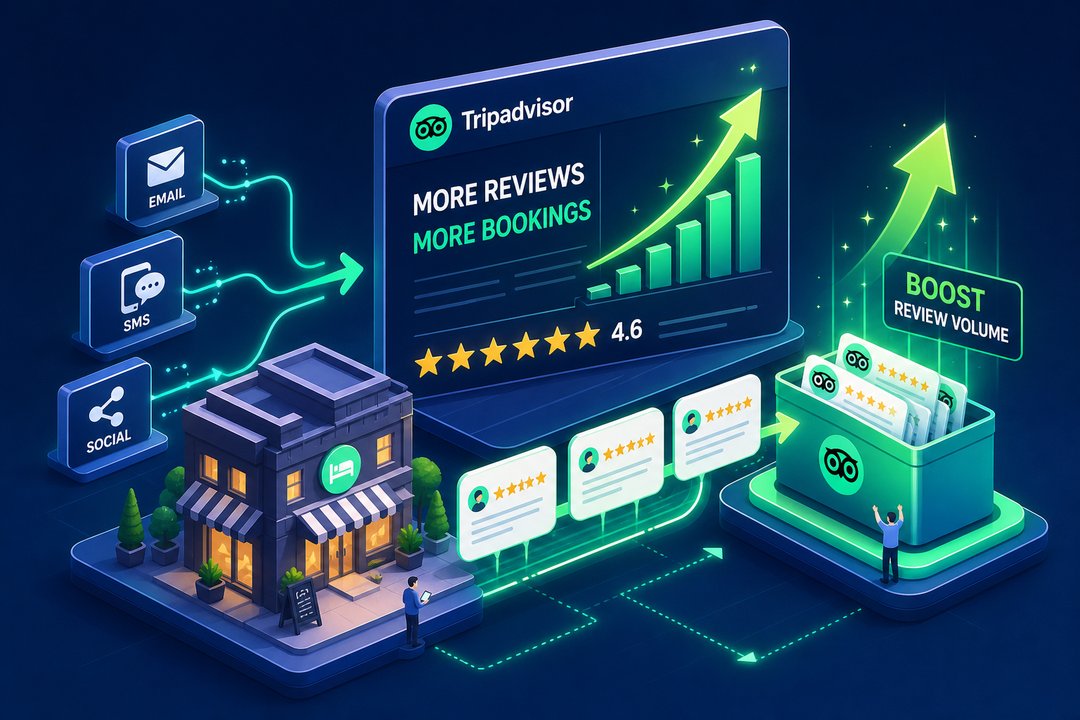
The mechanics of turning that automation into a steady climb in review count are covered in our piece on how to boost your TripAdvisor review volume fast.
Revenue management: the integrations that pay for themselves
Revenue management is the category most hotels get right first, and for good reason, because a dynamic pricing tool usually covers its own cost inside a single season. 4. RoomPriceGenie is the pragmatic pick for independent and boutique properties, automating rate decisions without needing a full-time revenue manager to drive it. 5. Duetto is the choice when the property is larger or more complex, with open pricing and forecasting that a dedicated commercial team can push hard. Both pull occupancy and rate data from Mews and write prices back, so the pricing engine and the PMS stay in step without manual exports.
Distribution, point of sale and upselling
This trio keeps inventory accurate and pulls more value out of every booking once it lands. 6. SiteMinder is the distribution layer, a channel manager that keeps rates and availability synced across Booking.com, Expedia and the rest, so a sale on one channel closes the room everywhere. 7. Lightspeed covers point of sale for food and beverage heavy properties, posting restaurant and bar charges onto the guest folio in Mews rather than onto a separate till. 8. Oaky handles upselling, offering room upgrades and extras at the moments a guest is most likely to say yes, with the revenue flowing back into the reservation. None of these replaces a person. Each removes a manual step that used to leak time or money.
Back of house: staffing, operations and the numbers
The last four are the quiet multipliers, the ones that never touch the guest directly but decide whether your team can deliver the experience that earns the reviews. 9. Planday sits in HR and staffing, building rotas against occupancy so you are not over-staffed on a quiet Tuesday or short on a full weekend. 10. Flexkeeping runs operations and housekeeping, turning checkout events in Mews into room-status tasks the floor team sees in real time. 11. Lighthouse (formerly OTA Insight) brings market intelligence and benchmarking, so you read your performance against a competitive set rather than only against last year. 12. Chekin handles online check-in, guest registration and the compliance paperwork that varies by country, which matters more than most hoteliers expect until an inspector asks for it.
How to choose what to add first
Add the integration that closes the widest gap between effort and return, and for most Mews hotels that is the empty reputation slot, not a second revenue tool. Audit your stack against the categories above, find the one with nothing in it, and weigh what that gap is costing you. A property already running a pricing engine and a channel manager will usually get more from automated review collection than from a marginally better rate algorithm, because the first brings in new demand and the second only refines demand you already have.
Because Mews charges nothing to connect, the cost of getting a single choice wrong is low, and the cost of leaving a slot empty is the one that adds up. Start with the category that feeds the others. If that is reputation, ReviewFilter is built for Mews properties and connects through the same marketplace as everything above. See the Lite, Core and Pro plans for the side of the stack that quietly decides whether the rest of it ever gets a booking to optimise.